
Club Paulistano – Football: champion and pioneer
MAIN TITLES
🏆 (1x) Nacional (Taça Elixir de Nogueira) – 1920;
🏆 (11x) Paulista – 1905, 1908, 1913, 1916, 1917, 1918, 1919, 1921, 1926, 1927 e 1929;
🏆 (1x) Taça Ioduran – 1918;
🏆 (3x) Taça Competência – 1919, 1920 e 1922;
🏆 (4x) Torneio Eliminatório – 1924, 1926, 1927 e 1928.
A Pioneer and Greatest Team in its Early Stages
⚽ Founded by a group of young people who wanted to practice sports, Paulistano emerged from a meeting at the extinct Rotisserie Sportsman (located in the historic center of São Paulo). The candlelit meeting, on the evening of November 30, 1900, created a club that regularly participated in the finals of football competitions in its early days in Brazil.
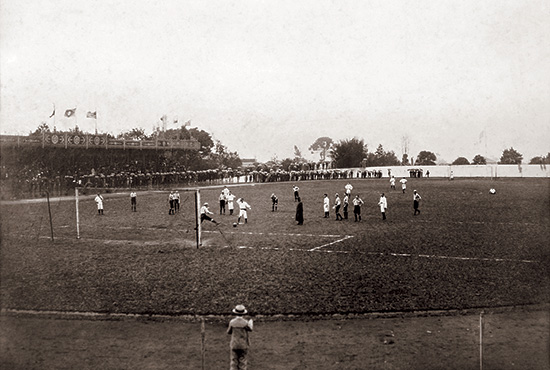
Photo: Centro Pró-Memória
🏟️ The Velódromo Paulista [in the area where the Teatro Cultura Artística is located today] was its first home; the Jardim América field its second and last. These two locations (and many others) had the privilege of seeing the white and red team win many trophies and tournaments.
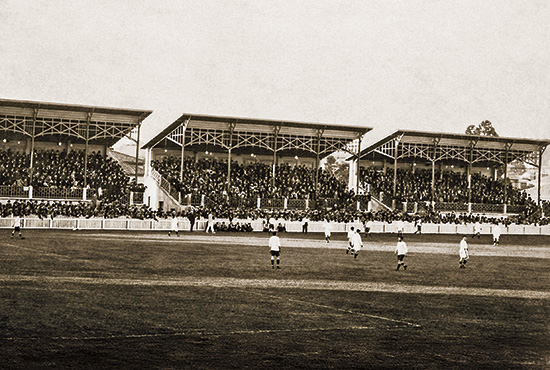
Photo: Centro Pró-Memória
1️⃣ It was the creator of several entities and a pioneer in achievements and accomplishments. Founder of the LPF (Liga Paulista de Foot-Ball), in 1901, it competed in the first Campeonato Paulista the following year. It also created APSA (Associação Paulista de Sports Athleticos), in 1913, an entity that later managed and organized several state competitions.
🔝 In the Paulista championship alone, the red-and-white team was victorious 11 times: 1905, 1908, 1913, 1916, 1917, 1918, 1919 – the only four-time champion in over a hundred years of competition –, 1921, 1926, 1927 and 1929. It ceased to be the state’s most successful club only in 1941; and, until 2026, it is ranked 5th in total titles, behind Corinthians (31), Palmeiras (27), São Paulo and Santos (both with 22).
🏆 It won competitions such as the Taça Ioduran (a kind of Rio-São Paulo tournament), the Taça Competência (against the champion of the interior of São Paulo state), and a nationally significant one (the Taça Elixir de Nogueira, in 1920).
🥇 It won cups and trophies in friendly matches and charity tournaments (common at the time), in addition to four editions of the Torneio Eliminatório (later called the Torneio Início, at the start of the season).
🚢 It was also the precursor of Brazilian football in Europe in 1925, being the first Brazilian team to play in France, Switzerland, and Portugal, with nine wins in ten matches.
🥅 Stars who wore the white and red uniform also made history in football, such as the brothers Rubens and Fernão Salles; the defender, captain, and manager Orlando Pereira (and his brother, Sérgio), all of whom played for the Brazilian national team; plus Friedenreich, Filó, Clodoaldo, and Abate, as well as Formiga.
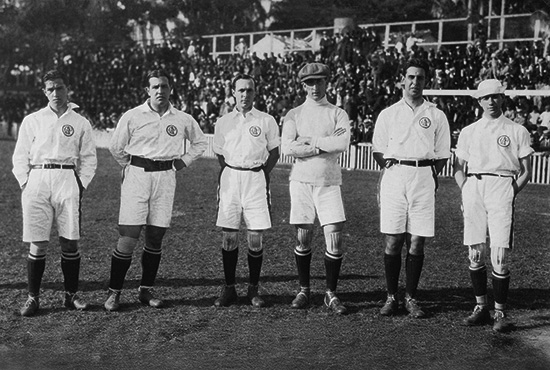
Photo: Centro Pró-Memória
Outcome Due to Amateurism
↪️ Paulistano left APSA at the end of 1925 to found LAF (Amateur Football League, where it was victorious three times – 1926, 27 and 29), in a final move by president Antonio Prado Junior to maintain amateurism.
🔚 At the end of 1929, champion and dominant, but dissatisfied with the direction the sport was taking, Prado Jr. ended football activities at the Club and thus closed one of the most brilliant chapters in its history.
Read more:
• Football – The tour in Europe, in 1925
• Paulistano – About the Club